
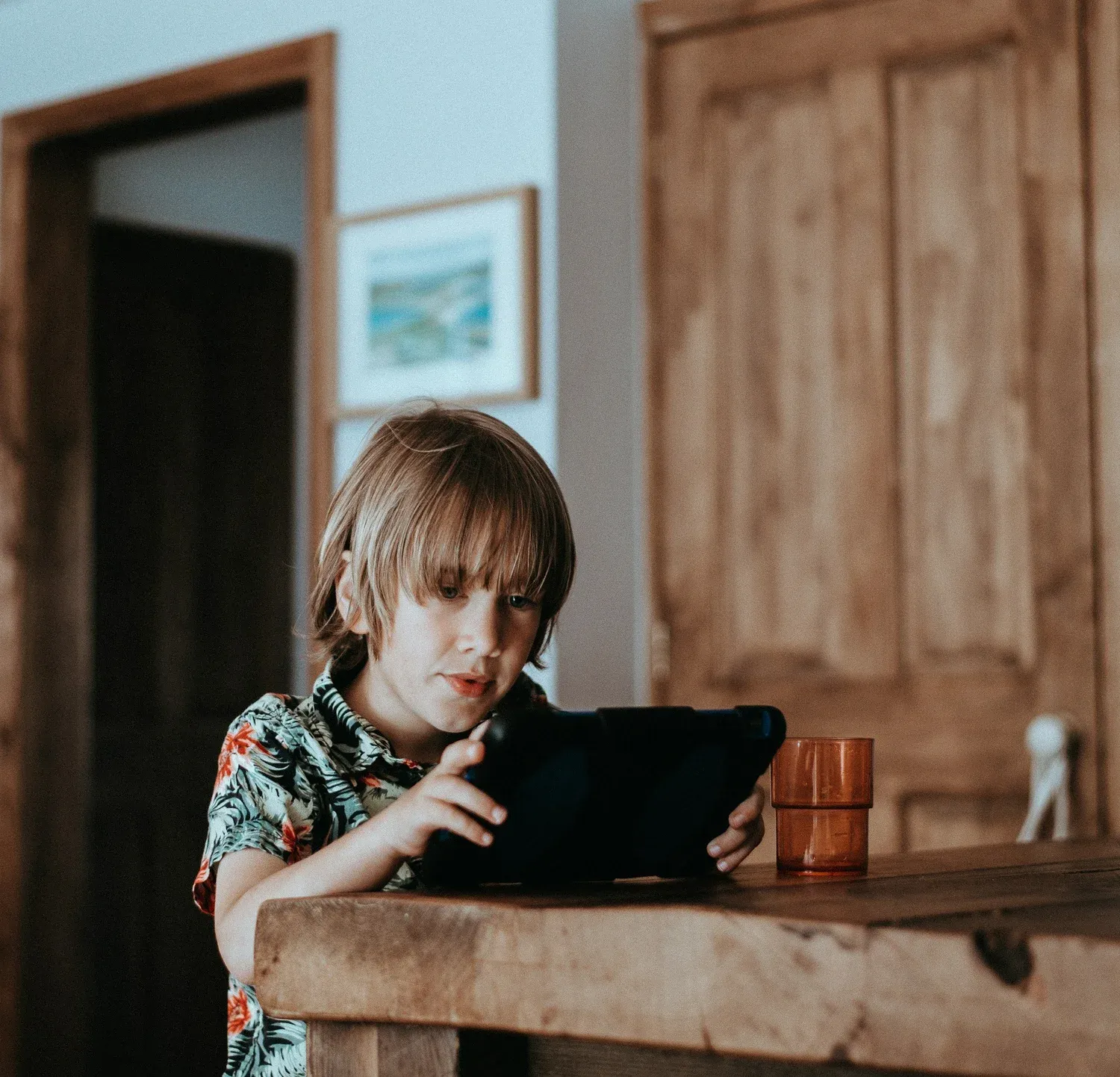
YouDance has no Instagram, Facebook, or TikTok, and it never will. That is a deliberate choice, not an oversight. We built YouDance to give homeschooling families a calm, ad-free place for children to learn dance, and mainstream social media works against nearly everything we care about. These platforms are designed to hold a child’s attention for as long as possible, to sell that attention to advertisers, and to keep the feed moving long after a real lesson would have ended.
If you homeschool, you already make careful decisions about what comes into your home and how your children spend their hours. This is one of ours. Below is the full reasoning, along with what the research actually says about children and social media, so you can weigh it for your own family.
Why doesn’t YouDance have any social media?
The short answer is that our purpose is to move children off the feed and into real activity, and you cannot do that while also competing for their attention in the feed. The moment a curriculum company starts posting for likes, it is fighting for the very attention it claims to protect.
So we made a trade. Instead of scattering short clips across platforms that autoplay into the next video, we keep every lesson inside one quiet members area. When your child opens YouDance, there is a lesson and a reason to stand up and move. There is no feed to scroll, no comment section, no notifications, and no advertising of any kind. Nothing is engineered to keep them watching once the lesson is done.
What the research says about children and social media
You do not have to take our word for how demanding these platforms are. The pattern is well documented by sources most homeschooling parents already trust.
According to the U.S. Surgeon General’s 2023 advisory on social media and youth mental health, up to 95 percent of teens ages 13 to 17 use a social media platform, and more than a third say they use it “almost constantly.” Nearly 40 percent of children ages 8 to 12 use social media as well, even though 13 is the minimum age on most platforms.
The hours add up fast. Common Sense Media reports that teens average about nine hours of entertainment media a day and tweens about six, and that total does not even include screen time for school or homework.
The advisory also names real costs. Nearly a third of teens say social media has had a mostly negative effect on their mental health, and 46 percent of teens ages 13 to 17 say it makes them feel worse about their bodies. The Surgeon General was blunt about the cause, pointing out that these products are often designed to maximize engagement rather than to protect the well-being of the young people using them.
We read that evidence the way many homeschooling parents do. It is a strong case for keeping our lessons out of that environment entirely, rather than adding one more feed to a child’s day.
But isn’t YouDance on YouTube?
We do keep a YouTube channel, and the difference is worth explaining. We use it only to host free lesson previews and tutorials so families can watch our teaching before they subscribe. We do not post for engagement, we are not building a following, and there is no feed of ours for a child to fall into. It works as a public video library, not a social account. The full, structured curriculum lives behind a single login, where the only thing waiting is the next lesson.
How do you grow without social media?
Slowly and honestly. We grow through word of mouth from homeschooling families, through this blog, and through parents who find us in a search when they are looking for a real PE or fine arts option. We would rather earn your trust with a curriculum that works than compete for your child’s attention in an algorithm. That choice means we grow more gradually than a company chasing viral clips, and we are at peace with the tradeoff.
What this means for your homeschool
For your family, the practical effect is simple. Dance becomes screen time that gives something back. Your child follows a real teacher through a real progression, builds genuine skills, gets the heart rate up, and then closes the laptop. No algorithm decides what they see next, and no ad tries to sell them something on the way out.
If you have been looking for a way to add movement to your week without handing your child another feed, that gap is exactly what we built YouDance to fill. You can see how the curriculum is structured, and read more about protecting children from the harmful effects of advertising and the difference between passive and active play.