Does Dance Count as a Fine Arts Credit for Homeschool?
Does Dance Count as a Fine Arts Credit for Homeschool?
If your child loves to dance, you may have wondered whether all those hours of practice and instruction could count toward something more formal on a homeschool transcript. The short answer is yes -- dance absolutely qualifies as a fine arts credit for homeschool. The longer answer involves understanding what fine arts credits are, how to document them, and why colleges care about seeing them on a transcript.
This guide covers everything you need to know about earning a homeschool fine arts credit through dance, from hour requirements and documentation to building a transcript that colleges and umbrella schools will take seriously.
What Is a Fine Arts Credit?
A fine arts credit is an academic credit earned through study and practice in a creative discipline. The four traditional categories of fine arts are:
Visual arts -- drawing, painting, sculpting, photography, graphic design
Music -- instrumental or vocal lessons, choir, band, music theory
Theater -- drama, community productions, filmmaking, technical theater
Dance -- ballet, jazz, hip hop, contemporary, tap, clogging, and other formal styles
According to the National Art Education Association, fine arts education develops critical thinking, creativity, and discipline -- skills that extend well beyond the studio. Most public schools require one to two fine arts credits for graduation, and many colleges expect to see the same on a homeschool transcript.
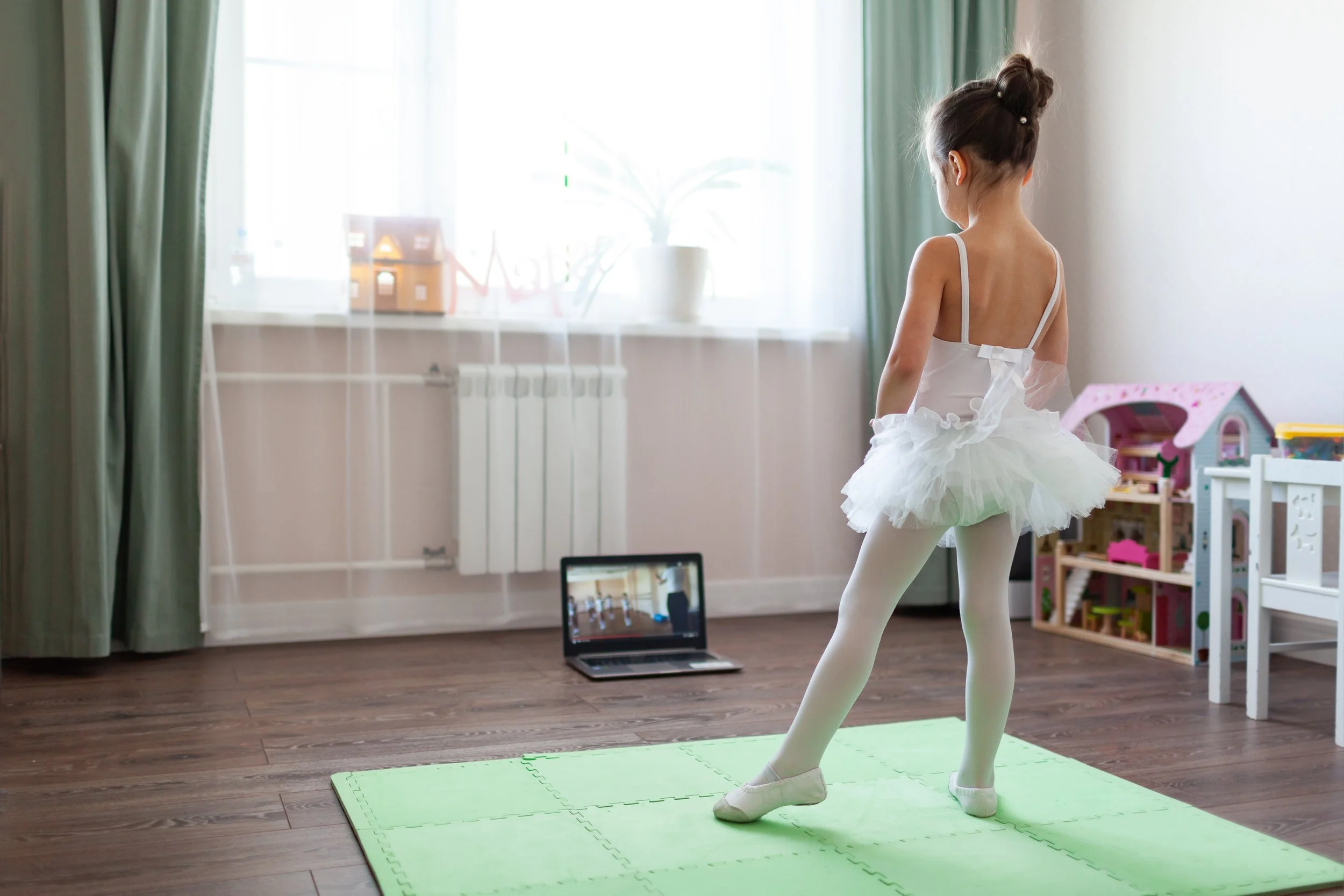
The good news for homeschooling families is that dance fits squarely within the fine arts category. Whether your child studies ballet at a local studio, follows an online curriculum, or participates in a community dance program, that instruction can be counted and credited.
How Many Hours Equal One Fine Arts Credit?
Credits for homeschool high school are typically measured using what is called a Carnegie Unit. One Carnegie Unit equals roughly 120 to 180 hours of instruction or study in a single subject. The exact number depends on your state and, in some cases, the umbrella school or homeschool organization you are affiliated with.
Here is a general breakdown:
1 full credit = 120-180 hours of instruction and practice
0.5 credit (half credit) = 60-90 hours
0.25 credit (quarter credit) = 30-45 hours
For context, if your child spends three to four hours per week on dance -- combining lesson time, practice, and related study -- they will accumulate a full credit over the course of a standard school year. That is roughly the same time commitment as a typical public school elective.
Some states lean toward the lower end of the range, while others expect closer to 180 hours. If you are unsure about your state's specific requirements, the Home School Legal Defense Association maintains a state-by-state guide that is worth checking.
What Kinds of Dance Count Toward Fine Arts?
Nearly any structured form of dance instruction qualifies. The key word is "structured." Watching random dance videos for fun is not the same as following a sequenced curriculum or taking lessons with clear learning objectives.
Here are examples of dance activities that count toward fine arts credit:
Formal dance classes -- ballet, jazz, hip hop, contemporary, tap, clogging, ballroom, lyrical
Online dance curricula -- programs that offer structured, sequential instruction across weeks or months
Community or studio performances -- recitals, showcases, competitions
Dance history and appreciation -- studying the cultural and historical roots of different dance forms
Choreography projects -- creating original routines, which involves both creative and critical thinking
Attending live performances -- watching ballets, modern dance shows, or musical theater productions
The more variety you include, the richer the credit becomes. A strong fine arts credit might combine weekly lessons with occasional performances, a short unit on dance history, and a choreography project.
If you are looking for an online dance curriculum that covers multiple genres in a structured format, YouDance offers over 215 weeks of lessons across ballet, hip hop, contemporary, jazz, and clogging -- all designed for ages 5 to 17 and built with homeschool families in mind.
Fine Arts vs. PE: Can Dance Count as Both?
This is one of the most common questions homeschool parents ask, and the answer requires some care.
Dance is physical. It builds strength, flexibility, coordination, and cardiovascular endurance. It also involves artistic expression, musicality, creativity, and technique. That dual nature means dance could logically fit under either fine arts or physical education on a transcript.
However, the general rule in most states and among most colleges is that the same activity cannot be double-counted toward two different credit categories. If you log your child's dance hours as fine arts, those same hours should not also appear as PE credit -- and vice versa.
The practical solution is to decide which credit your child needs more and assign dance accordingly. For many homeschool families, the fine arts credit is the harder one to fill, especially if a child is not involved in music or visual art. Dance becomes an ideal way to meet that requirement.
If your child needs both PE and fine arts credit and dance is their primary activity, you have options:
Split the hours. Use half the year's dance hours for fine arts and the other half for PE.
Separate the activities. Count structured dance lessons as fine arts and additional physical conditioning (stretching routines, cardio warm-ups, cross-training) as PE.
Use different years. Credit dance as fine arts one year and PE the next.
For more ideas on how to approach the PE side of things, take a look at our post on the best homeschool PE options.
How to Document Dance for a Homeschool Transcript
Documentation is what turns an activity into a transcript-ready credit. Without it, there is no way to verify the work was done. The good news is that documenting dance does not require anything complicated -- just consistency.
Track Your Hours
Keep a simple log that records the date, activity, and duration. A notebook or spreadsheet works fine. Here is an example format:
DateActivityHoursSept 5Ballet lesson (online curriculum)1.0Sept 5Practice and review0.5Sept 8Hip hop lesson1.0Sept 10Dance history reading0.5
At the end of the year, total the hours and assign the credit.
Write a Course Description
Many colleges and umbrella schools ask for course descriptions alongside the transcript. For a dance fine arts credit, a simple paragraph will do. Include:
The genres studied
The curriculum or instruction source
The total hours
Any performances, projects, or supplementary activities
Example: "This course covered structured dance instruction in ballet, hip hop, contemporary, jazz, and clogging through an online curriculum. The student completed weekly lessons, practiced technique independently, studied basic dance history, and participated in a year-end choreography project. Total instructional hours: 145."
Assign a Grade
Grading in homeschool fine arts is often based on effort, participation, and completion rather than a standardized test. Some families use a simple scale:
A -- Consistent effort, completed all lessons, participated in extra activities
B -- Completed lessons with moderate effort
C -- Partial completion with minimal engagement
As long as your grading approach is reasonable and consistent, colleges will accept it.
Do Colleges Actually Care About Fine Arts Credits?
Yes -- and the degree to which they care depends on where your child applies.
Many colleges and universities list fine arts as a recommended or required part of a complete high school transcript. This is especially true for competitive schools. Even when fine arts is not technically required for admission, having it on the transcript demonstrates a well-rounded education.
Here is a quick look at how fine arts credits factor into admissions:
State universities -- Most recommend one to two fine arts credits. Some require at least one.
Private universities -- Often expect to see fine arts as part of a balanced course load.
Community colleges -- Typically have more flexible admission requirements but still value a complete transcript.
Scholarships -- Some scholarships specifically reward students with strong arts backgrounds.
For homeschooled students, a well-documented fine arts credit signals to admissions officers that the student received a broad education, not just core academics. Dance is a particularly strong choice because it combines physical discipline with artistic growth -- two things that stand out on a transcript.
Building a Multi-Year Fine Arts Plan
If your child is starting high school (or even middle school), it is worth thinking about fine arts credits as a multi-year plan rather than a last-minute addition.
A Sample Four-Year Approach
Year 1: Introduction to dance -- explore multiple genres (ballet, hip hop, jazz). Log hours toward a half or full credit.
Year 2: Focus on one or two preferred genres. Add dance history or appreciation. Earn another half or full credit.
Year 3: Intermediate technique. Include a choreography or performance project. Continue logging hours.
Year 4: Advanced study or independent project. Compile a portfolio or video showcase.
This approach gives your child a clear progression and builds a transcript that shows depth, not just participation.
For a structured plan that maps out an entire year of dance instruction, our post on building a homeschool dance curriculum breaks down how to organize lessons by genre and skill level.
Common Questions Parents Ask
Can younger kids earn fine arts credit for dance?
Fine arts credits typically apply to high school transcripts (grades 9-12). However, younger students can absolutely begin building foundational skills. If your child starts dance classes during elementary or middle school, those years of practice make the high school credit stronger and more meaningful.
What if my child only studies one genre?
One genre is enough for a fine arts credit. A full year of ballet, for example, is just as valid as a year that covers multiple styles. The key is sufficient hours and proper documentation.
Does online dance instruction count?
Absolutely. An online dance program with structured lessons, clear progression, and consistent use is just as valid as in-person studio classes. Many homeschool families prefer online options because of the flexibility, cost savings, and ability to fit lessons into an existing schedule.
Do I need to hire a certified teacher?
No. Homeschool parents can award fine arts credit based on any legitimate educational experience -- a structured online curriculum, community classes, private lessons, or a combination. There is no requirement for a state-certified instructor in most homeschool settings.
Making It Count
Dance is more than movement. It is a discipline that teaches rhythm, expression, perseverance, and artistry -- all qualities that fine arts education is designed to develop. For homeschool families, it is also one of the most accessible and enjoyable ways to satisfy a transcript requirement that might otherwise feel difficult to fill.
The steps are straightforward: choose a structured form of dance instruction, track the hours, write a course description, and assign a grade. Whether your child is just beginning or has been dancing for years, those hours deserve a place on their transcript.
If you are building your child's homeschool dance curriculum and want a program that is already organized by genre and skill level, YouDance was designed for exactly this purpose -- structured, family-friendly lessons that fit a homeschool schedule.
Related reading: