Hip Hop Dance for Kids: A Parent's Guide to Getting Started
Hip Hop Dance for Kids: A Parent's Guide to Getting Started
Hip hop dance for kids is one of the most requested styles among young dancers -- and for good reason. It is high-energy, expressive, and set to music that children genuinely enjoy. But for parents who did not grow up in the dance world, the idea of enrolling a child in hip hop can come with questions. What exactly will they learn? Is it age-appropriate? Can they do it at home? And is it a "real" style of dance or just copying moves from music videos?
This guide answers those questions and more. Whether your child has been begging for hip hop classes or you are exploring dance options for the first time, here is what you need to know before getting started.
What Is Hip Hop Dance?
Hip hop dance is a broad category of street dance styles that originated in the 1970s in New York City, primarily within African American and Latino communities. What began as an informal, expressive art form at block parties and community gatherings has since evolved into a globally recognized dance discipline with its own techniques, vocabulary, and competitive circuit.
Common Styles Within Hip Hop
Hip hop is not a single style -- it is a family of styles. Here are some of the most common ones your child might encounter:
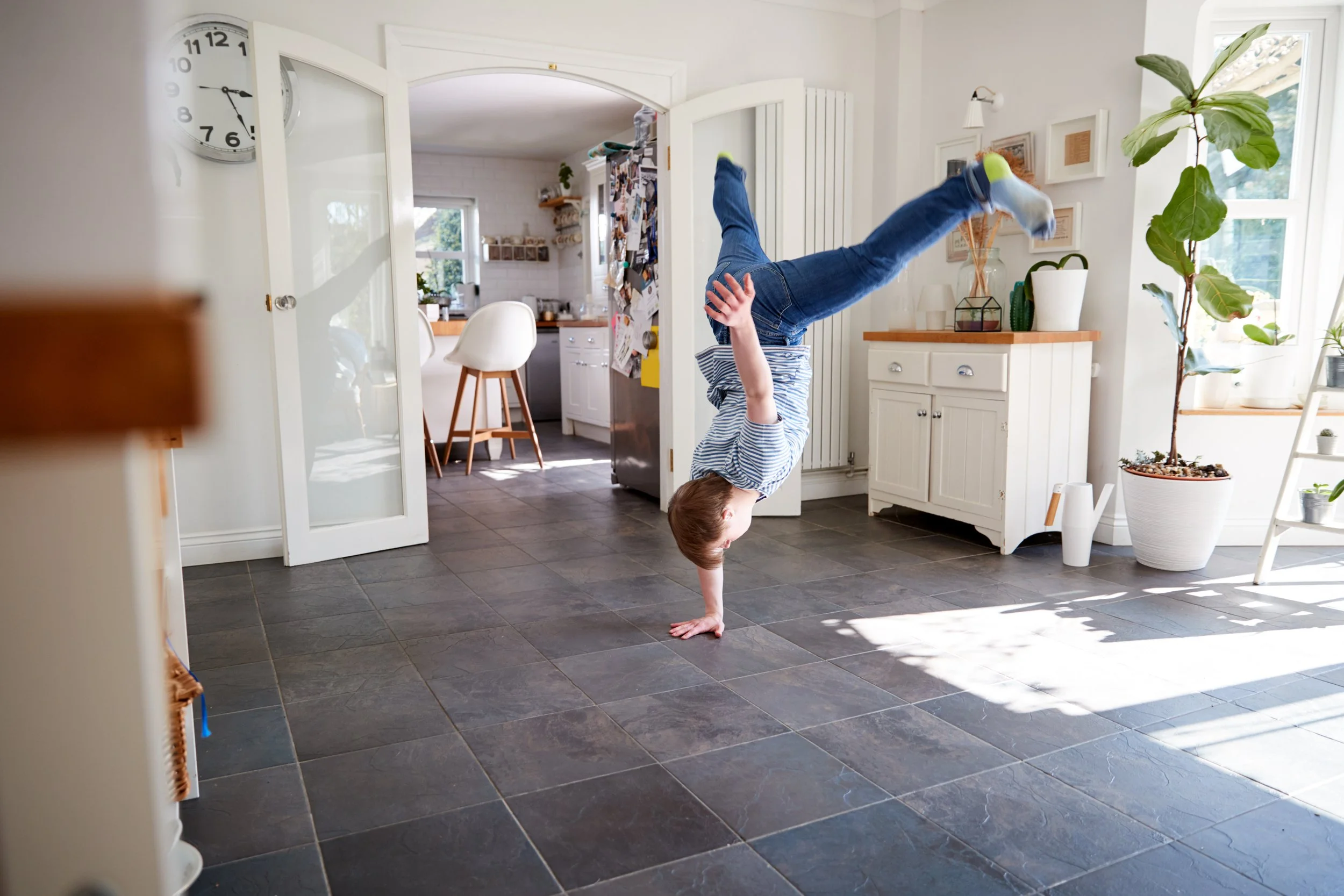
Breaking (breakdancing) -- acrobatic, floor-based movement including spins, freezes, and power moves
Popping -- quick muscle contractions that create a "popping" effect in the body
Locking -- sharp, distinct movements combined with relaxed grooves and pauses
Krumping -- high-energy, expressive, and emotionally intense movements
Choreography-based hip hop -- the style most commonly taught in studios and online programs, blending elements of the above with structured routines set to popular music
For kids, most classes focus on choreography-based hip hop, which teaches rhythm, coordination, and musicality through age-appropriate routines. It is the most accessible entry point for young dancers.
Why Hip Hop Is a Great Style for Kids
Parents sometimes wonder whether hip hop is the right fit compared to more traditional styles like ballet or jazz. The truth is that hip hop offers a unique combination of benefits that other dance styles do not always provide in the same way.
Physical Benefits
Hip hop is a full-body workout. A typical class involves:
Cardiovascular exercise -- the fast-paced movement gets heart rates up
Coordination and motor skills -- isolations, rhythmic footwork, and body control build fine and gross motor skills
Strength and endurance -- repeated movement patterns build muscle stamina over time
Flexibility -- warm-ups and cool-downs often include stretching that improves range of motion
According to the American Council on Exercise, dance-based exercise is one of the most effective ways for children to meet daily physical activity recommendations while actually enjoying it.
Confidence and Self-Expression
Hip hop is one of the most expressive dance forms. It encourages personal style and interpretation, which gives children permission to move in ways that feel natural to them. For kids who feel self-conscious in more structured or formal dance settings, hip hop often feels like a relief. The music is familiar, the energy is upbeat, and there is room to add personality to every move.
Over time, learning and performing choreography builds real confidence -- the kind that comes from mastering something challenging.
Creativity and Musicality
Unlike styles that follow strict technical rules, hip hop gives dancers room to interpret music in their own way. Children learn to listen for rhythms, accents, and beats within a song and translate what they hear into movement. This develops musicality -- a skill that benefits them in any style of dance they explore later.
What Age Can Kids Start Hip Hop Dance?
Most children can begin learning hip hop basics around age five or six. At this age, kids have enough coordination and attention span to follow simple choreography and understand basic rhythm patterns.
Here is a general guide by age group:
Ages 5-6 -- Simple movements, short combinations, and lots of repetition. The goal is rhythm, coordination, and building a love of movement.
Ages 7-9 -- Longer combinations and specific hip hop vocabulary. This is often where kids start to develop their own style.
Ages 10-13 -- More complex choreography, musicality, and performance quality. Students can work on full routines and explore sub-styles.
Ages 14-17 -- Advanced technique, freestyle, and the ability to learn longer routines quickly.
There is no requirement to start young. A twelve-year-old with no experience can begin hip hop and progress quickly. The key is finding a program that matches their current level, not their age alone.
What to Expect in a Hip Hop Class
If your child has never taken a hip hop class before, knowing the general structure can help set expectations.
Warm-Up
Every good class starts with a warm-up -- stretching, light cardio, and isolation exercises that get the body ready to move. Some instructors include rhythm exercises to get students locked into the beat before choreography begins.
Technique and Drills
The middle portion of class focuses on foundational skills -- body rolls, isolations, footwork patterns, and groove. These are the building blocks that make choreography look clean and intentional.
Choreography
Most of the class time goes toward learning a choreographed routine. The instructor breaks it into sections, teaches each one slowly, and builds them together. By the end of class, students can usually perform the full routine or a large portion of it.
Cool-Down
A brief cool-down with stretching helps prevent soreness and gives the body time to recover.
For families exploring online dance classes, this same structure applies to well-designed virtual programs. The progression from warm-up to choreography to cool-down stays the same.
Hip Hop at Home: Can Kids Learn Without a Studio?
Yes -- and more families are choosing this route every year.
Online dance programs have made it possible for children to learn hip hop from home with structured, sequential instruction. This is especially helpful for families in areas without nearby studios, homeschool families building a flexible schedule, or parents who want to supervise what their child is learning.
What to Look for in an Online Hip Hop Program
Not all online dance content is created equal. Here is what separates a real program from random videos:
Structured curriculum -- lessons build on each other week by week, not random one-offs
Age-appropriate instruction -- the music, language, and movements are designed with children in mind
Clear progression -- beginners start with fundamentals and advance to more complex choreography over time
Family-friendly content -- appropriate music choices, no suggestive movements, and a positive learning environment
If your child is interested in trying hip hop alongside other genres, YouDance includes hip hop as one of five dance styles in its curriculum -- alongside ballet, jazz, contemporary, and clogging. The lessons are designed for ages 5 to 17, with over 215 weeks of content that kids can work through at their own pace.
For a broader look at how to evaluate different platforms, our guide to choosing online dance lessons for kids walks through the key questions to ask before signing up.
What Should Kids Wear for Hip Hop?
One of the advantages of hip hop is that it does not require special gear. Here is what your child needs:
Comfortable clothing -- athletic wear, joggers, leggings, or shorts and a t-shirt. Anything that allows full range of motion.
Sneakers -- clean, flat-soled sneakers work best. Avoid shoes with heavy treads that grip the floor too much, as dancers need some ability to slide and pivot.
No jewelry -- loose bracelets, necklaces, or earrings can be distracting or get caught during movement.
Hair pulled back -- especially for longer hair, keeping it out of the face helps kids see and move freely.
If your child is dancing at home, socks on a smooth floor or bare feet on carpet are fine for beginners.
Hip Hop and Your Homeschool
For homeschooling families, hip hop dance fits naturally into multiple areas of your child's education.
Physical Education
Dance is one of the most effective and enjoyable ways to meet PE requirements. A regular hip hop practice easily counts toward physical activity hours, and many homeschool families use dance as their primary PE curriculum. For more on this, see our post on the best homeschool PE options.
Fine Arts Credit
Hip hop qualifies as a fine arts credit on a homeschool transcript when properly documented. If you are logging hours toward a transcript, our guide on whether dance counts as a fine arts credit covers how to track hours, write course descriptions, and structure the credit.
Cultural Studies
The history of hip hop is deeply connected to American history and African American culture. Studying its origins alongside the physical practice adds depth that strengthens both the dance experience and your child's understanding of cultural expression.
Addressing Common Parent Concerns
"Is hip hop appropriate for young kids?"
This depends entirely on the program. Hip hop as a dance form is not inherently inappropriate -- it is a legitimate art form with deep cultural roots. The concern parents usually have is about music and movements in a particular class. A well-designed children's program uses age-appropriate music, avoids suggestive choreography, and focuses on skill development and fun. When choosing a program, preview a lesson if possible and look at the music selection, instructor's language, and overall tone.
"My child has no dance experience. Can they start with hip hop?"
Absolutely. Hip hop is one of the most beginner-friendly styles because it does not require the years of foundational training that styles like ballet demand. Most hip hop classes for children assume no prior experience and build skills from the ground up.
"Will hip hop help if they want to try other dance styles later?"
Yes. Hip hop builds rhythm, coordination, body awareness, and confidence -- all of which transfer directly to other styles. Many dancers who start with hip hop go on to explore jazz, contemporary, or other genres with a strong foundation. If your child is curious about multiple styles, our post on dance classes for homeschoolers covers how to explore different genres.
Getting Started: A Simple Plan
If your child wants to try hip hop, here is a straightforward way to begin:
Start with one class or lesson per week. This is enough to build basics without overwhelming a beginner.
Choose a structured program. Whether in-person or online, look for something with a clear curriculum -- not just random videos.
Create a consistent practice space. A living room with enough room to move, a screen to follow along with, and a smooth floor is all you need.
Let them explore. Avoid pressuring kids to perform or progress at a certain pace. The goal at the beginning is to enjoy moving.
Add more as interest grows. If they love it, increase to two or three sessions per week, add complementary styles, or look into performances and showcases.
Dance should be something your child looks forward to, not something that feels like an obligation.
A Style Worth Exploring
Hip hop dance gives kids something rare -- a way to be physically active, creatively expressive, and genuinely excited about learning, all at the same time. It does not require expensive gear, years of prior training, or a studio down the street. Whether they are five or fifteen, hip hop meets kids where they are -- and for many young dancers, it is the style that makes them fall in love with dance for the first time.
For families building a homeschool dance curriculum or looking for a program that covers hip hop alongside other genres, YouDance offers structured, on-demand lessons designed for exactly this kind of learning -- family-friendly, sequential, and built for beginners.
Related reading: